

You bought three delicate gold chains. You put them on. They tangled into a knot that took ten minutes to undo. What went wrong?
Layering necklaces isn’t random. There’s a system. Ignore it, and you get a mess. Follow it, and your neckline looks intentional, expensive, and effortless. Here’s the system.
The Three-Length Rule: Why 16, 18, and 20 Inches Work
The most common layering mistake is wearing chains that are too close in length. A 16-inch and a 17-inch chain will sit almost on top of each other. They’ll tangle because there’s no space between them. You need a minimum 2-inch gap between each layer.
Standard lengths that actually layer well
Start with a 16-inch choker as your top layer. Add an 18-inch chain for the middle. Finish with a 20- or 22-inch pendant as the bottom. That 4-inch total spread keeps each piece visible and separate.
For shorter necklines (crew necks, turtlenecks), use 14, 16, and 18 inches. For deeper necklines (V-necks, scoop necks), go 16, 20, and 24 inches.
What happens when you break the rule
Two 18-inch chains worn together will cross and tangle within an hour. The physics is simple: same radius, same movement, constant friction. Don’t do it. If you must wear two chains of identical length, make one a thick curb chain and the other a fine cable chain — the weight difference keeps them separated.
Clasp Types Matter More Than You Think
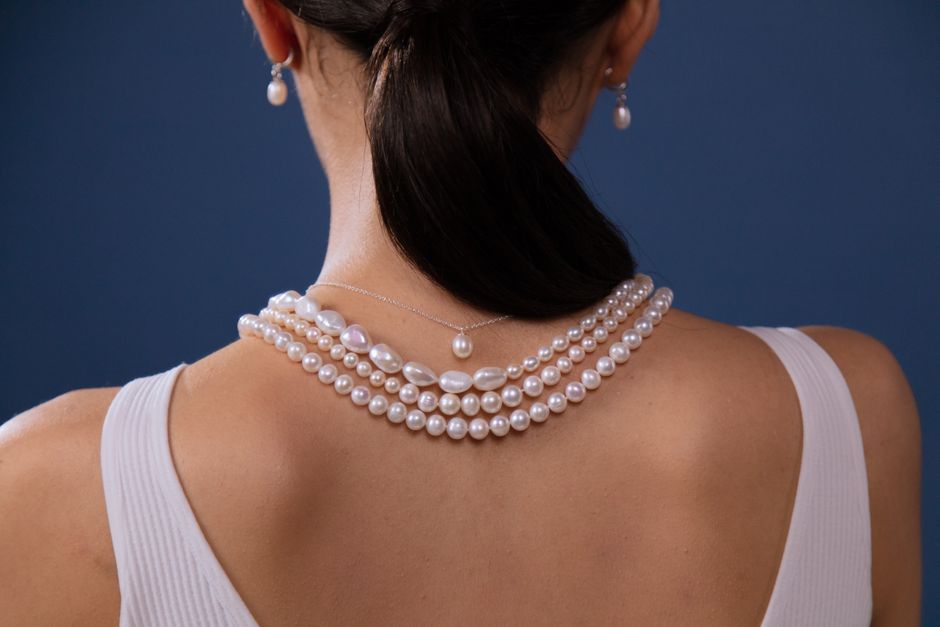
Lobster clasps are standard on most fine jewelry. They’re also the worst clasp for layering. Here’s why: a lobster clasp has a moving arm that can hook onto the links of another chain. Once hooked, you get a tangle that requires tweezers to fix.
Spring ring clasps are slightly better because they close flush. But the best option for layering is a magnetic clasp — specifically, one with a safety lock so it doesn’t pop open accidentally. Mejuri and Catbird use magnetic clasps on several of their layering-specific chains. They cost about $30 more per piece, but you’ll save that in frustration.
If you already own chains with lobster clasps, slide the clasp to the front of your neck when you put them on. This keeps the hardware visible and prevents it from snagging on your hair or other chains.
Metal Mixing: The One Rule You Can Break
Fashion magazines tell you to stick to one metal tone. That advice is outdated. Mixed metals look intentional when you follow two guidelines: keep the finish consistent, and limit yourself to two tones.
| Metal Combination | Works Best With | What to Avoid |
|---|---|---|
| Yellow gold + rose gold | Warm skin tones, earth-tone outfits | Adding silver — three metals look chaotic |
| Yellow gold + white gold | Cool skin tones, black or navy outfits | Mixing polished yellow gold with matte white gold |
| Silver + white gold | Monochrome or gray outfits | Adding rose gold — the warm/cool clash looks accidental |
Finish consistency is non-negotiable. A high-polish yellow gold chain next to a hammered yellow gold chain looks like two different sets. Keep all your layers in the same finish — polished, matte, or hammered — for a cohesive look.
Three Layering Mistakes That Ruin the Look

These are the errors I see most often. Avoid them and you’re already ahead of 80% of people who try layering.
Mistake 1: All pendants, no plain chains
Three pendants clustered at your collarbone look like a charm bracelet gone wrong. You need at least one plain chain in your stack. A simple 18-inch cable chain or a 16-inch choker without a pendant gives the eye a resting point. The pendants become accents, not clutter.
Mistake 2: Ignoring your neckline
A 24-inch chain with a crew neck t-shirt looks sloppy. The chain hangs below the neckline and gets caught on the fabric. Match your shortest chain to your neckline height. For a crew neck, your shortest chain should be 18 inches. For a V-neck, 16 inches works because the chain sits inside the V.
Mistake 3: Every chain has the same link style
Three cable chains of different lengths still look like one chain that broke. Vary the link style. Use a curb chain, a rolo chain, and a cable chain. The different textures create visual interest even if all three are the same metal tone.
Missoma makes a 16-inch beaded chain that pairs well with a 20-inch Gorjana cable chain. The bead texture breaks up the smooth links. Ana Luisa offers a hammered disc pendant on a 22-inch chain that works as a statement bottom layer.
When NOT to Layer Necklaces
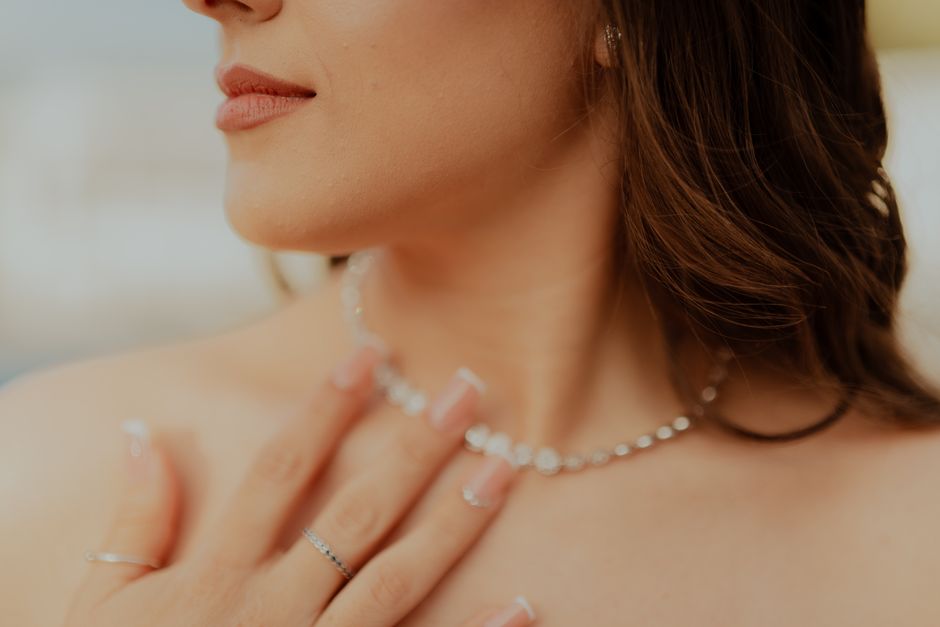
Layering isn’t always the answer. Here’s when to wear a single chain instead.
If your outfit has a high neckline like a turtleneck or a collared button-up shirt, skip the layers. One long chain that falls below the collar — 22 inches or longer — looks cleaner. Adding more chains above the fabric creates bulk at the neck that reads as frumpy.
If you’re wearing a busy print — floral, plaid, animal print — a single delicate chain is better. Three chains compete with the pattern. One chain complements it.
If your necklaces are all thick (3mm or wider links), don’t layer them. Two thick chains create a heavy look that overwhelms most necklines. Save the thick curb chain for solo wear and use fine chains (1mm to 1.5mm) for layering.
The single most important takeaway: space your lengths 2 inches apart, mix your link textures, and always keep one chain plain.