Most candidates spend weeks preparing answers and almost no time thinking about what they’ll wear. Research on interviewer behavior suggests that appearance-based judgments form rapidly — often within the first two to four minutes of meeting someone — and can shape how every subsequent answer gets interpreted. This isn’t about looking expensive. It’s about signaling that you understood where you were going before you arrived.
The rules have shifted considerably since 2026. Hybrid work, remote-first cultures, and broad workplace casualization have made “what to wear to an interview” a genuinely complicated question. The correct outfit now depends on industry, role level, and company culture — and getting it wrong in either direction, too formal or too casual, sends a signal you probably don’t intend.
What Hiring Managers Are Actually Evaluating When You Walk In
Interviewers aren’t consciously auditing your wardrobe. What they’re reading — often without realizing it — is whether your appearance suggests you did your homework.
Three things tend to register most clearly in those first few minutes:
Fit and proportion
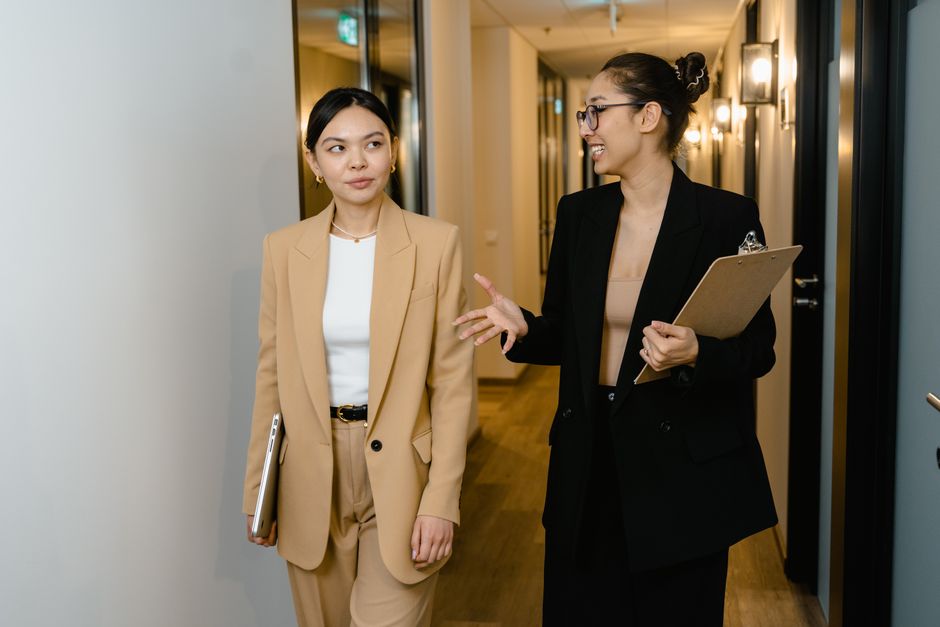
Ill-fitting clothing — too loose across the shoulders, too tight at the waist, hems that drag — reads as inattention to detail. This matters in an interview context because interviewers make inferences about how you approach other kinds of tasks. A well-fitted blazer over a clean blouse typically outperforms a technically “professional” outfit that doesn’t fit. The Ann Taylor Perfect Blazer (around $179) is a consistent recommendation here because it comes in an extended size range and fits true to size without requiring tailoring for most people.
Color coherence
Clashing colors or an overly complex palette creates visual noise. An interviewer’s attention goes to processing what they’re seeing rather than focusing on what you’re saying. Neutrals — navy, charcoal, camel, ivory — form a reliable base because they don’t compete with your face. Color works when it’s intentional and controlled. It becomes a problem when it’s the loudest thing in the room.
Condition of garments
Wrinkled fabric, visible pilling, or scuffed shoes are noticed even when interviewers can’t articulate why a candidate seemed “off.” These details tend to register as carelessness regardless of what the item originally cost. Steam your clothes the night before — not the morning of — and check footwear under natural light before leaving the house.
Industry Dress Codes in 2026: A Direct Comparison

There is no universal correct answer. Appropriate formality varies significantly by sector — and the table below reflects what hiring managers in these environments generally expect.
| Industry | Expected Formality | Reliable Outfit Formula | What to Avoid |
|---|---|---|---|
| Finance / Law / Consulting | Business formal | Tailored blazer + matching trousers or knee-length skirt; closed-toe heels | Open-toe shoes, bold prints, overly casual fabrics |
| Corporate tech (FAANG-level) | Business casual | Structured blouse or fitted blazer + dark trousers or tailored midi skirt | Full matching suit (reads as out of touch with company culture) |
| Startups / creative agencies | Smart casual | Blazer over fitted tee + tailored trousers or dark jeans | Overdressing in formal attire signals a poor culture read |
| Healthcare / education | Business casual | Blouse + slacks or A-line skirt; flat or low-heel shoes | Strong fragrances, dangling jewelry that moves |
| Retail / hospitality management | Polished casual | Neat dress or blouse and trousers; clean footwear in good condition | Heavily wrinkled fabrics like raw linen |
| Government / nonprofit | Business casual to formal | Conservative blouse + blazer + trousers; minimal jewelry | Loud colors, fashion-forward silhouettes, visible logos |
A reliable default: dress one level above what you think the company’s daily standard is. It’s easier to be perceived as thorough than to recover from appearing underprepared.
Fit Beats Price. Every Time.
A $40 blouse that fits correctly outperforms a $200 blouse that gaps at the buttons. A well-fitted Uniqlo ponte blazer ($69.90) worn with confidence reads more professional than a designer piece that was never tailored. Spend money on alterations before spending it on brand names.
Color in Interview Contexts: The Questions Most Candidates Actually Have
Is wearing all black too severe for an interview?
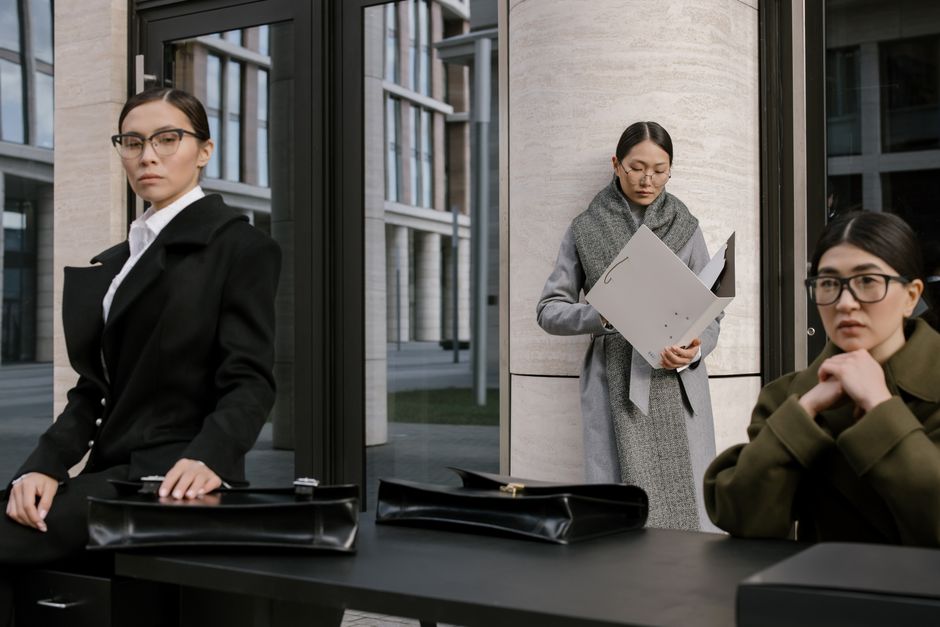
Not typically. Black reads as polished and authoritative in most professional settings, particularly in finance, law, and corporate environments. The risk appears in people-centered roles — education, social work, client-facing healthcare — where it can feel impersonal. In those contexts, a cream or dusty rose blouse underneath a black blazer tends to soften the overall effect without sacrificing professionalism.
Can I wear color at all?
Yes — and color done well can be memorable in a useful way. Navy is almost universally safe and reads as confident without being aggressive. Burgundy and forest green work well in most business casual settings. What to avoid: overly saturated tones that pull focus away from your face. Muted versions of most colors generally land better than their vivid counterparts in interview contexts.
What about prints and patterns?
Small, contained patterns — a fine check, a subtle stripe — are generally acceptable in business casual environments. Large-scale prints, bold florals, and abstract graphics are higher risk. A simple test: if the pattern is the first thing someone notices about your outfit from across a conference table, it’s likely too much for most interview settings.
Seven Outfit Mistakes That Cost Candidates Before They Speak
- Wearing new shoes on interview day. Shoes that haven’t been broken in cause visible discomfort during the walk from reception to the conference room. Wear them for a full week first.
- Skipping a lint roller check. Pet hair and lint are visible under office lighting in ways they aren’t at home. Check your outfit in natural light before leaving.
- Overdressing for a casual company. Arriving in a full formal suit to a startup that operates in jeans and hoodies signals you didn’t research the culture. Check the company’s team page, LinkedIn photos, and public social media before deciding on formality level.
- Choosing discomfort over appearance. Visibly adjusting your skirt, pulling at a tight waistband, or walking stiffly in heels you never wear reads as distraction. Comfort affects how you carry yourself — and that affects how you come across.
- Ignoring how a skirt reads while seated. A seated interview often reveals more than a standing mirror check. Anything shorter than knee-length generally becomes a point of distraction once you’re across a desk from someone.
- Wearing noticeable fragrance. Perfume detectable across a conference table is widely considered unprofessional. Wear nothing or something subtle enough to be perceptible only at close range.
- Treating video interviews as lower stakes. Virtual interviews on Zoom or Teams still require a professional presentation from the waist up. Banana Republic Sloan trousers or a structured blouse from M.M. LaFleur read cleanly on camera without creating visual noise or competing with your face on screen.
Building a Reliable Interview Outfit Without Buying an Entire Wardrobe
Three anchor pieces cover most professional interview scenarios across industries. You don’t need a dedicated interview wardrobe — you need the right three things.
A neutral blazer with clean shoulder seams
The shoulder seam should sit exactly at the edge of your shoulder — not hanging off it, not cutting in. J.Crew’s Regent Blazer ($168) is a frequent recommendation because its structured shoulder holds shape without requiring tailoring. For higher-stakes environments in finance or law, Theory blazers ($300–$450) and The Fold’s tailored options are worth the investment — both brands design for professional contexts specifically and hold up well across repeated wear without losing structure.
A bottom that works both seated and standing
Dark tailored trousers remain the most versatile option. Uniqlo’s Smart Ankle Trousers ($39.90) hold their shape through a full day without heavy creasing and come in a generous size range. Avoid anything with a stretch waistband that creates visible lines under a blazer, or trouser fabrics so lightweight that they wrinkle immediately with sitting.
A clean blouse or shell in a controlled tone
Silk-look polyester wrinkles less than real silk and photographs well on camera. Ann Taylor’s blouse range (typically $49–$89) is a reliable standard — structured enough to look intentional, varied enough to work under blazers or on their own. Avoid decorative ruffles, sheer fabric, or low necklines — these elements pull visual focus away from your face during conversation, which is where attention belongs.
For footwear, Cole Haan’s Juliana pumps ($130) are a strong default: a 2.5-inch heel, genuine leather construction, and a comfort footbed that doesn’t require weeks of breaking in. If heels aren’t something you wear regularly, a clean leather flat or low block heel is always a better choice than a stiletto that visibly affects how you walk into a room.
When Playing It Safe Actually Works Against You
Here’s the part most interview-prep advice skips: dressing too conservatively for a culture-forward company can signal that you don’t understand them.
A design studio, a fashion brand, a media company — these organizations often use the interview as an early test of cultural fit. Arriving in a beige blazer and black slacks when everyone on their team page is wearing expressive, individualistic outfits quietly communicates that you either didn’t research them or wouldn’t adapt well to their environment.
In these contexts, a distinctive color choice, a more contemporary silhouette, or a well-chosen accessory can work in your favor. The goal isn’t self-expression for its own sake. It’s demonstrating that you read the room accurately enough to show up looking like you already belong there.
The research process most candidates apply exclusively to preparing interview answers should extend to getting dressed. Look at the team page. Check LinkedIn photos from company events and offsites. Most organizations have enough public-facing visual content to make their culture legible to anyone who looks. Arriving in the right outfit for that specific company is one of the clearest early signals that you did — which is exactly the impression you were trying to make the moment you walked in.