Decathlon’s own-brand products account for roughly 60% of everything the company sells — including, notably, running shoes. The running aisle in any Decathlon store can have 30+ models across two brands, four categories, and a price range from £25 to £110. For a retailer that positions itself as making sport simple and affordable, the running shoe section is surprisingly hard to navigate.
Most people stand there for ten minutes, pick whatever looks good, and buy the wrong shoe.
Not catastrophically. No immediate injury. Just a pair that compresses flat in four months instead of eight, or low-grade knee soreness after every long run that never fully resolves. Decathlon running shoes are genuinely good — some of them are excellent — but they perform only when matched to the right training load and runner type.
How Decathlon Organizes Its Running Shoe Brands
Everything becomes simpler once you understand the two-brand split. Decathlon’s running shoes are not one unified range — they’re two distinct product families aimed at different runners.
Kalenji: Casual and Beginner Running
Kalenji is Decathlon’s original running brand. These shoes target people running up to about 30 km per week — weekend joggers, people finishing a couch-to-5K program, fitness runners who run three times a week at easy pace. The construction reflects that usage: standard EVA foam midsoles, basic rubber outsoles, textile uppers. Honest materials for the price, not engineered for heavy training loads.
The Kalenji range runs from the Run Active (around £28) — essentially a gym shoe that tolerates short jogs — through the Run Support (around £42), which adds a medial post for mild overpronation control, up to the Run Comfort (around £52) with better heel cushioning and a proper rigid heel counter. Above this, the quality jump is meaningful. That’s where KIPRUN starts.
KIPRUN: Built for Runners Who Train Consistently
Decathlon launched KIPRUN as a standalone performance running brand around 2019, targeting runners logging 30–70+ km per week. The foam compounds are different — denser, more resilient, slower to compress under repetitive impact. Uppers use engineered mesh rather than basic textile. Heel counters are stiffer. Outsole rubber covers high-wear zones more thoroughly.
The KIPRUN lineup divides into daily trainers (KD models: KD500, KD500X, KD900) and speed shoes (KS models: KS500). The £20–35 price difference over Kalenji reflects genuine material upgrades, not brand positioning. If you run more than three times a week consistently, start your search in the KIPRUN section rather than Kalenji.
The Full Decathlon Running Shoe Lineup
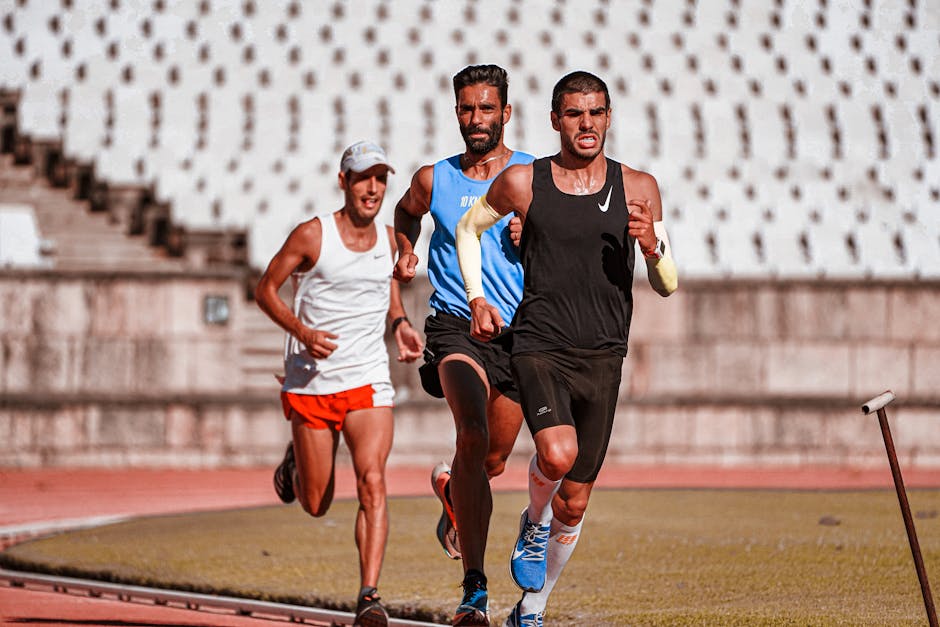
| Model | Brand | Approx. Price | Weekly Mileage | Type | Best For |
|---|---|---|---|---|---|
| Run Active | Kalenji | £25–30 | 0–15 km | Neutral | Beginners, gym cross-training |
| Run Support | Kalenji | £38–45 | 10–25 km | Stability | Beginner overpronators |
| Run Comfort | Kalenji | £48–55 | 15–30 km | Neutral | Casual everyday running |
| KIPRUN KD500 | KIPRUN | £60–70 | 30–50 km | Neutral | Regular training, daily miles |
| KIPRUN KD500X | KIPRUN | £70–80 | 30–50 km | Stability | Overpronation, motion control |
| KIPRUN KS500 | KIPRUN | £65–75 | 30–50 km | Neutral/Speed | Tempo runs, intervals |
| KIPRUN KD900 | KIPRUN | £85–100 | 50+ km | Neutral/Max cushion | High mileage, marathon training |
Prices reflect typical UK retail in 2026. European euro pricing runs close to equivalent. Decathlon’s sale cycles — January and August especially — regularly discount KIPRUN models by 20–30%. Checking the site a few weeks before buying can shave £15–20 off a KD500 without waiting long.
The Mistakes That Send You Home with the Wrong Pair
These errors happen with specific regularity at Decathlon — not always at other shoe retailers — because the value pricing and broad range creates particular decision traps:
- Choosing by price, not by mileage. The Run Active is not an inferior version of the KIPRUN KD500 — it’s a different shoe designed for different usage. Spending £28 when you need a £70 shoe doesn’t save money. It costs you a replacement purchase in four months and possibly some knee discomfort in between.
- Ignoring the stability question entirely. If your ankles roll inward when you run — overpronation — the neutral KD500 will accelerate knee and hip stress over time. The KD500X or Run Support are not optional upgrades in that case. They’re the correct shoe for that foot mechanics.
- Assuming Decathlon sizing matches your usual brand. KIPRUN models run slightly narrow in standard width and can measure short at the toe. If you’ve had pressure on the little toe in Nike or Adidas, try the wide (W) version — several KIPRUN models offer one, though it’s not always displayed on the main shelf. Ask in-store.
- Mixing up road and trail models. Decathlon sells trail variants of several models with lugged outsoles that wear quickly on tarmac and feel unstable on flat surfaces. The Road/Trail label on the box is functional information, not a lifestyle category. It changes the outsole entirely.
- Re-buying the same model without checking for updates. Decathlon refreshes its lineup every 12–18 months. A KIPRUN KD500 from 2026 and one from 2026 may share a name but differ in foam density, heel drop, and outsole coverage. Always read the product spec page, not just the model name on the box.
- Trying shoes on first thing in the morning. Feet swell during exercise — sometimes by a full half size. A shoe that fits perfectly at 10am in a quiet store may pinch across the forefoot after 30 minutes of running. Try running shoes in the afternoon or after some movement, not before any physical activity.
Which Decathlon Running Shoe to Actually Buy
Clear picks by runner type. No hedging.
Casual runners (0–20 km per week): Kalenji Run Comfort
Skip the Run Active entirely — the foam is too thin and the heel counter too soft for any sustained effort. The Kalenji Run Comfort at around £50 is the minimum viable starting point: real heel counter, adequate midsole stack, better lateral structure than the base model. At this mileage it will last 12–18 months without noticeable foam degradation.
If you overpronate, swap to the Run Support instead — same price bracket, adds a medial post that makes a real functional difference even at low weekly distances. Don’t buy the Run Active as a cost-saving move. It’s the wrong tool.
Regular runners (20–45 km per week): KIPRUN KD500 or KD500X
This is where Decathlon’s value proposition becomes genuinely hard to argue against. The KIPRUN KD500 at £60–70 is a legitimate daily trainer. Heel stack sits at roughly 27–29mm with an 8–10mm drop — similar geometry to the ASICS Gel-Pulse 15 or Saucony Ride 17, which both retail at £100–120. The foam compound is meaningfully denser than Kalenji and holds up past 600 km when rotated with a second pair.
Test it in-store: press your thumb firmly into the KD500 midsole. It should resist noticeably. The density difference between KIPRUN and Kalenji foam is tactile and immediate — you don’t need to be a shoe expert to feel it. If it collapses easily, you’re either pressing a Kalenji or a model that’s been sitting on a warm shelf too long.
For overpronators: the KIPRUN KD500X adds a denser medial foam wedge that controls inward roll without making the shoe feel stiff. The inner side is firmer, the outer side remains cushioned. This is the correct shoe if a gait analysis or physio has confirmed overpronation — not an optional upgrade.
For speed sessions: the KIPRUN KS500 at £65–75 uses a stiffer, more responsive foam and a lower stack height. Use it specifically for tempo runs and intervals, not everyday miles. The thinner outsole wears faster at high volume. That’s the tradeoff for the snappier ground feel, and it’s a worthwhile one for dedicated speed sessions.
High-mileage runners (50+ km per week): KIPRUN KD900
At this training volume, foam longevity becomes the governing factor. Mid-grade foams — including the KD500’s compound — compress noticeably past 500–600 km. The KIPRUN KD900 at £85–100 uses a higher-grade foam with more volume and better rebound retention. The ride is softer and more protective on long-effort days, which matters when those days happen three or four times per week.
At £90, the KD900 competes on daily training function with the Brooks Ghost 16 (around £130) and ASICS Gel-Nimbus 26 (around £165). The gap at racing pace is real. The gap on easy and moderate long runs is much smaller. For recreational runners logging serious miles without competitive racing goals, the price difference is hard to justify against the KD900.
When to Look Past Decathlon Entirely
If you’re running 80+ km per week, chasing competitive marathon times under 3:30, or managing a diagnosed biomechanical issue requiring precise stability geometry, the KIPRUN line runs out of headroom. Foam technology, plate integration, and last precision in the New Balance Fresh Foam 1080 v14 or ASICS Gel-Kayano 31 is materially different at that training level — not a premium-label premium. Decathlon builds value running shoes. For most recreational runners, that’s entirely sufficient. For competitive-level training volume, the gap starts to matter.
Fit and Sizing: What to Check Before You Commit

How much toe space do you actually need?
The standard is 10–12mm between your longest toe and the end of the shoe when standing upright. KIPRUN models run 3–5mm shorter than Kalenji at the same marked size — a consistent inconsistency across the range. Most runners end up a half size larger in KIPRUN than in their street shoes. Try both your usual size and the next half size up. Wide (W) versions offer a broader forefoot and toe box with the same heel fit — worth requesting specifically if you’ve had little-toe pressure in standard-width shoes from other brands.
How to test the heel counter in-store
Press your thumb firmly into the rear section of the heel — the curved hard piece above the Achilles notch, not the side of the shoe. It should resist your thumb noticeably and spring back without collapsing. A soft heel counter — common on the Run Active and sometimes on older Kalenji clearance stock — allows the foot to rock during push-off. Under 5 km this is barely noticeable. Past 8 km, it causes friction blisters and wastes energy with every stride. Any shoe where the heel collapses under thumb pressure is the wrong shoe, regardless of how good the price looks.
What about lace security on longer efforts?
Decathlon ships most running shoes with round laces that loosen past 45 minutes of running. A flat waxed lace — sold in the accessories section for around £3 — locks the knot without creating pressure points across the forefoot. The swap takes 90 seconds and immediately tightens the fit consistency across every run. Worth picking up alongside the shoes.
One practical note: Decathlon’s return policy allows in-store returns on worn running shoes within 30 days if they’re the wrong fit — not just buyer’s remorse. Test them on a home treadmill or indoor surface before committing. Muddy outsoles void the return. The policy is useful; use it correctly by keeping the shoes clean until you’re certain.