
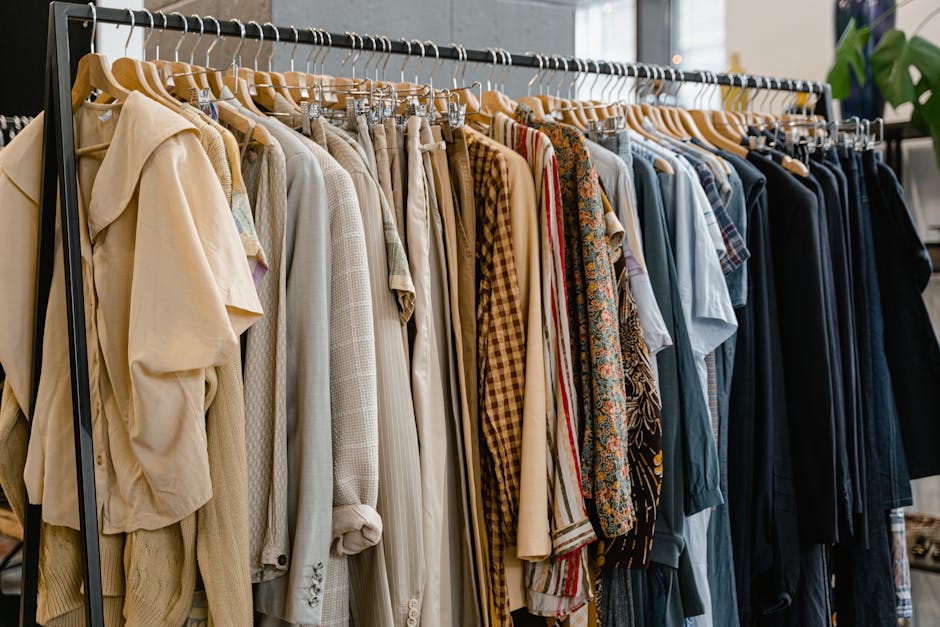
Most people think a minimalist wardrobe means owning 10 items and wearing the same gray tee every day. That’s not minimalism. That’s a uniform. The real goal is cutting the noise so every piece you own earns its hanger space. You stop wasting money on clothes you never wear. You stop standing in front of a full closet feeling like you have nothing.
This 30-day challenge is built for that. Not for people who want to live out of a backpack. For people who want a closet that works — where every shirt, pant, and shoe has a purpose. No more “maybe I’ll wear this someday” pieces. No more impulse buys from Instagram ads. Just 37 items that fit your actual life.
Why 37 Items? The Number That Actually Sticks
The 37-item target comes from the Project 333 challenge — 33 clothing items plus 4 accessories (shoes, bags, outerwear) for 3 months. It’s not arbitrary. Research from the Journal of Consumer Research shows that when people own more than 50 items, decision fatigue kicks in hard. You start skipping outfits entirely because picking one feels like work.
Here’s what 37 items covers for most people:
- 9 tops (3 tees, 3 blouses, 3 sweaters)
- 7 bottoms (2 jeans, 2 trousers, 2 skirts, 1 shorts)
- 5 dresses (2 casual, 2 work, 1 formal)
- 6 outer layers (2 jackets, 2 blazers, 1 coat, 1 cardigan)
- 4 pairs of shoes (sneakers, flats, boots, heels)
- 4 accessories (1 bag, 1 belt, 1 scarf, 1 watch)
- 2 pairs of tights/leggings
That’s 37 items total. Not including underwear, sleepwear, or gym clothes — those don’t count. The rule is simple: if you wouldn’t wear it to brunch or a meeting, it’s not in the 37.
The math behind decision fatigue
Every extra item in your closet adds a micro-decision. A 2012 study at Yale found that people with 100+ clothing items spend an average of 12 minutes per day deciding what to wear. That’s over 73 hours a year. The 37-item wardrobe cuts that to under 2 minutes. You grab from a curated set. No scrolling through 40 tees to find one that isn’t pilled.
Why not 10 items?
Because real life needs variety. A 10-item wardrobe works for digital nomads who wash clothes in sinks. For someone with a job, social life, and weather changes, 10 items means doing laundry every 3 days. 37 items gives you a full rotation without repetition feeling stale. You can go 2 weeks without repeating an outfit if you plan it right.
Week 1: The Purge — What Stays, What Goes, What You Regret

This week hurts. That’s the point. You’re going to pull every single item out of your closet and put it on your bed. Then you sort into three piles: Keep, Donate, and Sell. No “maybe” pile. Maybe is the enemy of minimalism.
Here’s the rule for Keep: if you haven’t worn it in the last 6 months, it goes. No exceptions. The only exception is formal wear you actually use (not “I might need a gown someday”). Seasonal items like winter coats get a pass if you wore them last season.
Real example: I had a pair of Zara wide-leg trousers I bought for $60. Wore them twice. They sat for 18 months. I kept telling myself “they’ll come back in style.” They didn’t. Donated them. That’s $60 I’ll never get back, but the mental space is worth more.
What to do with the rejects
Donate clothes in good condition to local shelters or thrift stores. For designer pieces, use The RealReal or Vestiaire Collective. For mid-range brands like Uniqlo or Everlane, try Depop or Poshmark. Expect to get 20-40% of retail value. That’s fine. The goal isn’t profit. It’s freeing space.
Items with stains, holes, or heavy pilling go to textile recycling. H&M and Levi’s both have in-store recycling bins. Drop them off. Don’t try to fix them unless you actually will — most people don’t.
The emotional trap
You’ll feel guilt. That dress you bought for a wedding you never attended. That sweater your ex gave you. That shirt from a vacation you loved. The guilt is not a reason to keep it. The memory exists without the object. Take a photo if it helps. Then let it go.
Week 2: Building Your 37 — The Brands That Deliver
Now you have an empty-ish closet. You’re going to fill it with exactly 37 items. If you already own enough keepers, you might only need to buy 5-10 pieces. If you purged hard, you might need 15-20. That’s fine. The key is buying pieces that work together, not standalone statement items.
The rule for every purchase: does this item work with at least 3 other items you already own? If not, skip it. A printed blouse that only matches one pair of pants is a waste. A neutral cashmere sweater that matches 5 bottoms and 3 jackets is gold.
Brands that consistently deliver for capsule wardrobes:
- Uniqlo — Best for basics. The Supima Cotton Tee ($15) and Airism Seamless Tanks ($20) are staples. Their Heattech line works for winter layering. Not flashy, but they last 2-3 years with proper care.
- Everlane — The Day Glove Flats ($98) and The Cotton Cashmere Crew ($100) are workhorses. Transparent pricing. Good for work-appropriate separates.
- COS — Minimalist design with better cuts than H&M. The tailored trousers ($120) and structured blazers ($175) hold their shape. Avoid their knits — they pill faster than Uniqlo.
- Muji — Japanese minimalism done right. Their linen shirts ($50) and organic cotton hoodies ($60) are comfortable and neutral-toned. Sizing runs slightly boxy — size down.
Where to save vs. splurge
Save on basics: tees, tanks, socks, underwear. Uniqlo and Muji cover these for under $25 each. Splurge on outerwear and shoes: a good wool coat from COS ($250) or Aritzia ($300) lasts 5+ years. Cheap coats look worn after one season. Same with boots — Blundstone Chelsea boots ($220) or Dr. Martens 1461s ($160) will outlast three pairs of fast-fashion boots.
The color palette rule
Pick 3 neutrals and 2 accent colors. Example neutrals: black, white, navy. Or beige, cream, gray. Accent colors: burgundy, olive, mustard. Every item you buy must fit within this palette. If it doesn’t, it doesn’t go in the 37. This ensures everything mixes and matches. You can create 30+ outfits from 15 items if the colors coordinate.
Week 3: The 30-Day Wear Test — What Actually Works

You have your 37 items. Now you wear them. Every day for 30 days. No shopping. No borrowing. No “I’ll just wear this old thing one more time.” The 37 are your only options.
This is where you discover what you got wrong. Maybe those Uniqlo tees are too thin. Maybe the Everlane flats hurt after 4 hours. Maybe you need one more pair of jeans and one less skirt. Take notes. At the end of 30 days, you can swap out up to 5 items that didn’t work.
Track your outfits. A simple app like Stylebook ($4) or a notebook works. Note which pieces you reached for most and which sat untouched. If something didn’t get worn in 30 days, it doesn’t belong in your 37.
What to do when you’re bored
Boredom will hit around day 10. You’ll see the same 5 outfits repeating. Fight it by layering differently. Wear the blazer over the dress instead of the tee. Tuck the sweater into the skirt instead of leaving it loose. Swap accessories — a different belt or scarf changes the whole look. The limitation forces creativity.
If you’re genuinely bored with your palette, you picked wrong. That’s fine. Adjust after 30 days. Add one accent color or swap a neutral. The system is flexible. The 37 isn’t a prison — it’s a baseline.
The laundry reality
With 37 items, you’ll do laundry once a week. That’s normal. Plan for it. Wash delicates in a mesh bag on cold. Hang dry anything with wool or silk. Uniqlo’s Airism tees dry in 2 hours — great for travel. COS trousers need ironing. Know what your items require before you’re stuck with a wrinkled shirt at 8 AM.
Week 4: The Permanent Edit — What Stays for the Next 3 Months
After 30 days of wearing your 37, you know what works. Now you lock it in. Swap out up to 5 items that failed the test. Replace them with better options. Then commit to this set for the next 3 months.
This is where minimalism becomes a habit, not a project. You stop thinking about clothes. You wake up, grab an outfit from your curated set, and go. The mental energy you save is noticeable. You’ll wonder why you ever owned 80 pieces.
Seasonal swaps happen every 3 months. When summer turns to fall, swap out 5-10 items. Light linen for cashmere. Sandals for boots. The core stays the same — your 3 neutrals and 2 accent colors carry over. You’re not rebuilding from scratch. You’re rotating.
What to do with seasonal overflow
Store off-season items in vacuum bags under your bed. Label them. When the season changes, swap. Don’t let off-season clothes clutter your closet. Out of sight, out of mind — and out of your decision fatigue.
The one-in-one-out rule
If you buy something new, something old must leave. No exceptions. This keeps your count at 37. If you buy a new COS blazer ($175), donate an old one. If you get a pair of Everlane loafers ($98), toss the worn-out Zara pair. The rule prevents creep. Within a year, you’ll have a wardrobe where every single piece is something you actually wear.
What Happens When You Skip the Challenge (The Failure Modes)
Most people fail this challenge in the first week. Not because it’s hard, but because they don’t purge honestly. They keep the “maybe” pile. They hold onto sentimental pieces. They buy 5 new items to fill gaps instead of working with what they have.
Here are the three most common failure modes — and how to avoid each one.
| Failure Mode | What It Looks Like | How to Fix It |
|---|---|---|
| The Hoarder Purge | You keep 60 items because “they’re all useful.” End up with a 37 that’s actually 55. | Set a hard limit. Count every piece. If you have 40 tops, pick 9. The rest go. No negotiation. |
| The Shopping Binge | You purge 30 items, then buy 25 new ones. Net change: -5 items. Missed the point. | Wait 2 weeks before buying anything. Wear what you kept first. You’ll realize you need less than you think. |
| The Palette Drift | You start with black/white/navy, then buy a red dress and yellow shoes. Now nothing matches. | Stick to your 3 neutrals + 2 accents for 3 months. No exceptions. Color discipline is the entire system. |
The challenge works if you follow the rules. The rules exist because the alternatives fail. You don’t need a bigger closet. You need a better one.
Start today. Pull everything out. Sort into three piles. Don’t let the “maybe” pile exist. In 30 days, you’ll have a wardrobe that costs less, takes less time, and makes you look better. That’s the whole point.