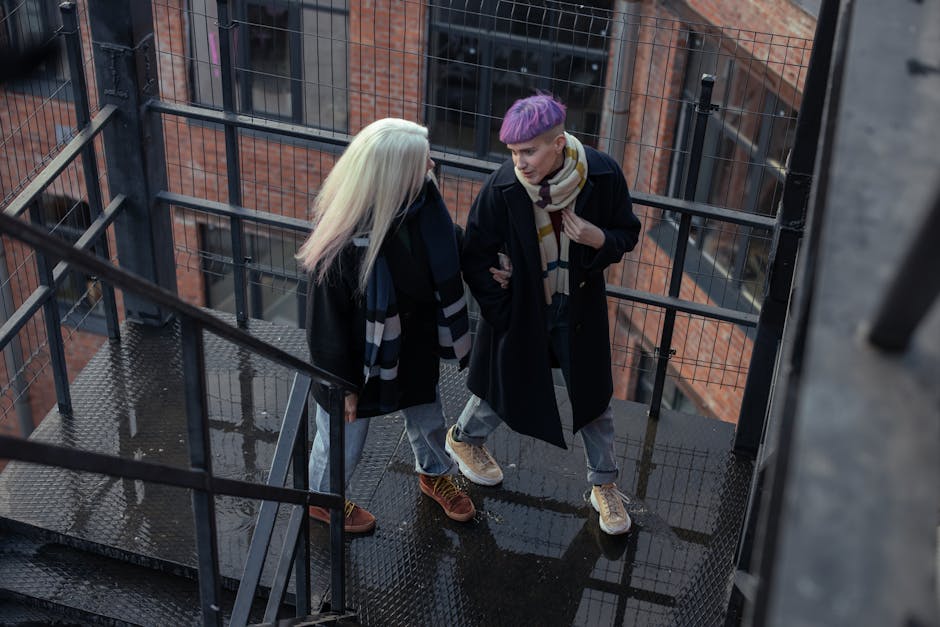
There is a persistent, almost dogmatic belief in the fashion world that a scarf is merely a decorative afterthought, a secondary layer tossed over the shoulders to combat a sudden drop in temperature. This perspective ignores the structural reality of the accessory. In truth, the way a scarf is integrated into an ensemble—what we might call the scarf joint—is the primary factor determining both the garment’s thermal efficiency and its visual silhouette. Whether you are looking at the technical joining of fibers in high-end knitwear or the physical knotting techniques used to anchor an outfit, the ‘joint’ is where the magic, or the mess, happens.
The Misconception of the Scarf as a Passive Accessory
Most consumers approach scarf selection based on color or softness, rarely considering the mechanical requirements of the scarf joint. We often assume that as long as the fabric is around the neck, it is doing its job. This is an oversimplification that leads to ‘thermal bridging,’ where heat escapes through poorly constructed gaps, and ‘aesthetic collapse,’ where the scarf overwhelms the wearer’s frame. A scarf is a structural component. It bridges the gap between the heavy architecture of a coat and the delicate lines of the face and neck. When the joint—the point where the scarf meets itself and the rest of the outfit—is weak, the entire look loses its intentionality.
Consider the difference between a loose drape and a structured knot. A loose drape offers zero wind resistance and frequently requires readjustment, which increases wear on the fibers through constant friction. Conversely, a technical joint, such as a disciplined Parisian knot, creates a seal that traps air. This isn’t just about looking ‘put together’; it is about the physics of insulation. The best scarf joint is one that balances this tension between security and drape, ensuring the accessory remains an active participant in the outfit’s performance rather than a sliding piece of fabric that needs to be managed every ten minutes.
When we analyze the history of tailoring, the ‘joint’ has always been the mark of quality. In woodworking, a scarf joint is used to join two pieces of timber end-to-end to create a longer, stronger piece. In fashion, we apply a similar logic. We are joining the accessory to the body. If the knot is too bulky, it disrupts the line of the lapel. If it is too thin, it looks disproportionate to a heavy winter parka. The researcher’s approach to this is to evaluate the weight of the fabric against the complexity of the joint to find a point of equilibrium.
Technical Scarf Joints in High-End Knitwear Construction
Before we even discuss how to tie a scarf, we must address the ‘scarf joint’ in the context of textile manufacturing. For those who invest in luxury knitwear, such as the Marks & Spencer Pure Cashmere Scarf (approx. £90), the way the yarn is joined during the weaving process is a critical indicator of longevity. Cheap scarves often use knots or simple overlaps to join yarn ends, which eventually work their way to the surface as unsightly lumps or ‘pills.’ A true professional-grade scarf utilizes what is known in the industry as a Russian Join or a technical scarf joint.
The Russian Join involves threading the yarn back into itself using a tapestry needle, creating a seamless, knotless connection. This is the gold standard for high-end accessories because it maintains the uniform diameter of the yarn. When you are wearing a fine-gauge cashmere scarf, any irregularity in the internal ‘joints’ of the fabric will cause the scarf to drape unevenly. This is why some scarves seem to ‘twist’ or hang awkwardly over time; the internal structural joints are failing or were poorly executed at the factory level. A high-quality joint ensures that the tensile strength of the scarf is consistent from end to end.
Evaluating Construction Quality
- Seamlessness: Run your hand down the length of the scarf. If you feel small, hard bumps, those are inferior yarn joints that will eventually lead to holes.
- Edge Stability: Check the selvedge. A well-constructed scarf joint at the fringe or hem prevents unravelling. The Johnstons of Elgin Cashmere Scarf is a prime example of superior edge-joining.
- Fiber Consistency: Look for uniformity in the knit. Inconsistent density often points to poor joining techniques during the spinning process.
For the enthusiast, understanding these technical details justifies the price point of premium retailers. While an ASOS Design Oversized Scarf (approx. £18) is excellent for a single-season trend, it often lacks the sophisticated yarn joining found in heritage brands. The trade-off is clear: lower price points usually mean more ‘knotted’ joints in the weave, which reduces the lifespan of the garment under heavy use.
Top Performance Scarf Knots for Structural Integrity
Moving from the microscopic construction to the macroscopic styling, the ‘best’ scarf joint for an outfit depends entirely on the coat’s neckline and the scarf’s material. A heavy wool scarf requires a different joint than a silk or light cashmere blend. The goal is to create a secure anchor that doesn’t require constant intervention throughout the day. Through rigorous observation of street style and functional testing, three specific joints stand out for their performance in 2024.
The Parisian (Loop) Joint
This is perhaps the most ubiquitous joint, and for good reason. By folding the scarf in half and pulling the ends through the loop, you create a symmetrical, high-volume joint that sits perfectly in the ‘V’ of a topcoat. It is particularly effective with the Barbour Merino Cashmere Tartan Scarf (approx. £40). The pro is its exceptional heat retention; the con is that it can be too bulky for those with shorter necks, potentially creating a ‘stifled’ appearance. It is a functional joint that prioritizes security over fluidity.
The Four-in-Hand (The Braided Joint)
Often used by those who want a more complex visual texture, the Four-in-Hand joint involves a series of loops that mimic a braid. This is the best scarf joint for windy conditions. Because the fabric is interwoven multiple times, the friction between the layers prevents the scarf from flapping. It works best with thinner, longer scarves. The complexity of this joint acts as a focal point, making it ideal for minimalist outfits where the scarf needs to do the heavy lifting aesthetically. However, it takes longer to execute and can be difficult to undo with gloved hands.
The Reverse Drape Tuck
This is a more relaxed joint, often seen in higher-end editorial styling. It involves draping the scarf over the neck, crossing the ends behind, and bringing them back to the front to tuck under the main loop. It provides a clean, streamlined look that doesn’t interfere with the lapels of a tailored blazer. It is the preferred joint for the ‘quiet luxury’ aesthetic, as it looks effortless while remaining structurally sound. The main drawback is that it requires a scarf of significant length—usually at least 180cm—to avoid looking truncated.
| Joint Type | Best Material | Security Rating | Style Aesthetic |
|---|---|---|---|
| Parisian Loop | Heavy Wool / Cashmere | High | Classic / Professional |
| Four-in-Hand | Fine Knit / Silk Blends | Very High | Technical / Detailed |
| Reverse Drape | Merino / Mid-weight Wool | Medium | Modern / Minimalist |
| Once-Round | Oversized Acrylic | Low | Casual / Bohemian |
Selecting Materials for Durable Scarf Joints
The success of any scarf joint is predicated on the friction coefficient of the material. If you choose a scarf that is too ‘slick,’ such as a high-shine synthetic or a very smooth silk, the joint will inevitably slip. This is a common frustration with budget-friendly scarves found at mass-market retailers. Conversely, a material with too much ‘tooth’ or texture, like a raw mohair, can make the joint so tight that it becomes uncomfortable and difficult to adjust. The researcher’s choice for the most versatile material is a 70/30 wool-cashmere blend.
Wool provides the necessary friction to hold a knot in place, while cashmere adds the softness required for comfort against the skin. When shopping at retailers like Marks & Spencer or through ASOS, look for ‘brushed’ textures. A brushed surface increases the surface area of the fibers, which helps the scarf ‘lock’ into itself when tied. This is particularly important for the Parisian knot, where the loop needs to stay put against the chest. If the material is too thin, the loop will collapse, losing its structural volume and failing to protect the neck from drafts.
Pro Tip: When wearing a scarf with a technical joint, always check the ‘tension’ of the knot. A joint that is too tight can restrict blood flow and cause discomfort, while one that is too loose will fail to provide the thermal benefits you are seeking. There should be exactly two fingers of space between the scarf and your neck.
For those prioritizing durability, the Barbour range often utilizes a denser weave that resists the stretching common in many knit scarves. A scarf that stretches too much will eventually cause the ‘joint’ to thin out over time, leading to a distorted shape. You want a fabric with high ‘spring-back’ or elasticity. Test this by bunching the scarf in your hand for five seconds; if it returns to its original shape immediately, it will hold a knot well. If it remains wrinkled and limp, the joint will likely fail within an hour of wear.
Preserving the Structural Integrity of Scarf Joins
Maintenance is the final, and perhaps most overlooked, aspect of the scarf joint. Every time you tie a knot, you are subjecting the fibers to localized stress. Over time, the area where the knot is consistently tied will begin to thin, fade, or pill. This is why many ‘favorite’ scarves eventually develop a visible ‘waist’—a section in the middle that is narrower and more worn than the ends. To prevent this, you must vary your joint techniques.
Switching between a Parisian loop one day and a simple drape the next redistributes the mechanical stress across the entire length of the fabric. Additionally, the way you store your scarf affects the ‘memory’ of the fibers. Never leave a scarf tied in a knot overnight. This sets the creases and can permanently weaken the yarn at the joint points. Instead, untie it, shake it out to realign the fibers, and either hang it over a wide, padded hanger or roll it loosely. Rolling is the preferred method for the deep researcher, as it avoids the sharp pressure points created by hangers.
Cleaning also plays a role in joint health. Excessive dry cleaning can strip the natural oils (lanolin) from wool scarves, making the fibers brittle. Brittle fibers break under the tension of a knot. Spot cleaning and the occasional gentle hand wash with a dedicated wool detergent are far superior for maintaining the ‘suppleness’ required for a beautiful joint. If you notice pilling at the knot site, use a high-quality fabric shaver, but be careful not to thin the fabric too much, as this will compromise the structural integrity of future knots.
Ultimately, the best scarf joint is a combination of high-quality textile construction, a knot suited to the environment, and a material that provides the right balance of friction and comfort. By treating the scarf as a structural element rather than a mere accessory, you elevate the entire outfit from a collection of clothes to a cohesive, high-performance system. Whether you are buying a luxury piece from a heritage brand or a versatile staple from a high-street retailer, the focus should always be on how that piece joins with your body and your wardrobe.