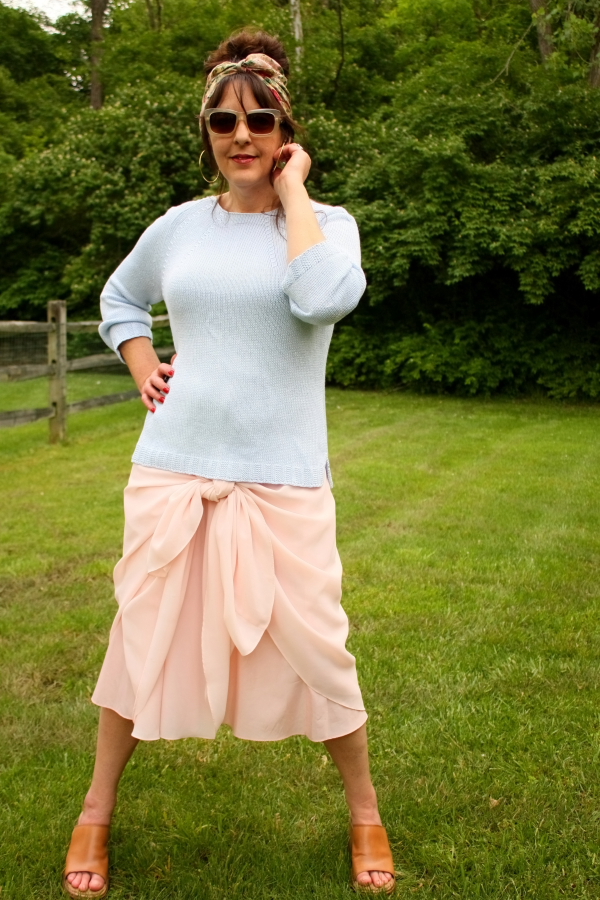
The knotted shirt has been a fixture in street style for years — runways, vacation photos, every “effortless” outfit post you’ve scrolled past. It’s held on because it solves a real problem: how to make a basic top look considered without buying anything new. But there’s a genuine gap between a knot that reads as deliberate and one that looks like you got interrupted mid-tuck, and that gap comes down to technique, fabric, and placement.
The Front Knot: A Complete Guide to the Move That Started It All
The front knot — gathering the hem of a shirt or blouse and tying it at your center or side waist — is the foundational technique. Done right, it pulls fabric away from the hip, creates a visible waistline, and shows a small amount of midriff without committing to a full crop top. That combination is genuinely versatile.
It’s also more forgiving than most people expect. A knot on a $12 H&M cotton tee looks the same as one on a $95 Madewell shirt if the fabric weight matches and the placement is correct. The garment price matters less than the execution.
Step-by-Step: How to Tie the Classic Side Knot
- Put the shirt on as normal. Don’t pre-adjust the hem.
- Grab both front panels — or just one side of the hem on a button-up — and pull toward the hip where you want the knot to land.
- Twist the fabric once before tying. This is the step most people skip, and it’s the one that makes the knot look structured instead of crumpled.
- Pass one end under and through, like tying a single shoelace knot. Pull slowly so the knot forms with consistent tension across the fabric.
- Slide the knot up to your natural waist before pulling it fully tight.
The twist before tying is the whole thing. Skip it and the knot bunches into a triangular lump. Use it and you get a compact, rounded shape that lies flat against the body.
Roll Knot vs. Gathered Knot
Two variants are worth knowing. The roll knot starts by rolling the hem up once before tying — this keeps the knot compact and low-profile, best for thinner fabrics like cotton jersey or modal. The Uniqlo AIRism Cotton Blend T-Shirt ($19.90) and the Everlane Organic Cotton Crew ($35) were basically made for this technique.
The gathered knot uses more fabric, stays loose before tying, and creates a fuller, more textured result. Use this on oversized shirts with extra fabric — the Madewell Oversized Flannel Shirt ($79.50), a vintage denim shirt, or any men’s dress shirt you’ve borrowed. One clear rule: never use the gathered knot on silk or satin. It won’t hold its shape and you’ll spend the rest of the day retying it.
Placement: High, Low, Center, Side
A high knot — sitting at or above the belly button — works best with high-waisted pants or skirts. It elongates the leg line and reads as structured. A low knot, at or just below the belly button, looks more relaxed. Better with low-rise denim or shorts. The summer-vacation look.
Center knots read as polished and intentional. Side knots feel casual and effortless. For button-ups, center is almost always the stronger choice. For soft jersey tees, either works depending on what’s below the waist.
One thing that trips people up: the knot placement on the body and where the bottom hem falls on the pants are related. A high knot over high-waisted trousers means a thin sliver of skin visible. A high knot over low-rise jeans means more exposure than you might want. Think about both pieces together before tying.
Four Knotting Techniques Beyond the Basic Shirt
The front shirt knot gets all the attention, but four other techniques see more use in everyday dressing — and two of them don’t involve shirts at all.
- The Back Knot — Gather the back hem of an oversized tee or button-up and tie it at the base of your spine. The front stays clean and flat; the back gains shape. This transforms the Free People Movement Studio Tee ($38) from a basic into something intentional. For a button-up: unbutton from the bottom, bring the two front panels around to your back, and tie. Same silhouette from the front, structured detail from the back.
- The Scarf Knot — Fold a square scarf diagonally, drape it around your neck, and tie a loose overhand knot at the front. Leave the ends hanging. The Hermès Twilly ($175) is the classic reference point here, but the ASOS 90s-style printed scarf ($14) does the same thing for a fraction of the cost. The technique is identical. Headband version: fold narrow, tie at the crown of the head, let the ends trail behind.
- The Belt Knot — Thread a thin ribbon belt through your loops (or wrap it around a dress), then tie a flat bow or simple knot at center front instead of using the buckle. The Topshop Satin Wrap Midi Dress ($65) has a built-in belt that can be replaced entirely with a ribbon tied this way — the silhouette reads softer, less formal. Works on any wrap dress or belted shirtdress.
- The Hem Knot on a Dress or Skirt — Grab one side of a flowy midi dress or skirt hem, pull it toward your thigh, and tie a knot. A full-length dress becomes an asymmetric mid-length. A midi becomes a mini on one side. The Zara Flowing Printed Dress ($49.99) is purpose-built for this — the fabric is lightweight enough to stay knotted without distorting. Best on cotton voile, rayon, or loose linen. Avoid this on anything with structure or lining.
One technique worth skipping entirely: knotting the hem of a blazer or structured jacket. The fabric is too rigid to form a natural-looking knot, and the result looks awkward rather than styled. Structured outerwear has its own design logic — work with it, not against it.
All four techniques above take under 30 seconds. These are quick adjustments, not construction projects.
Which Fabrics Hold a Knot and Which Fall Apart
Fabric is where most knotting attempts go sideways. Not every material holds through a full day of wear, and some — thick denim, structured cotton, heavy wool — create a knot so stiff it reads as a hardware problem rather than a styling choice.
| Fabric | Knot Hold | Best Technique | Verdict |
|---|---|---|---|
| Cotton jersey | Excellent | Front knot, back knot | Best starting point — forgiving and reliable |
| Modal | Excellent | Roll knot | Softest result, holds all day without retying |
| Linen blend | Good | Side knot, hem knot | Natural wrinkle adds texture — lean into it |
| Rayon / viscose | Good | Gathered knot, hem knot | Drapes well; use a half-hitch for security |
| Thin merino wool | Fair | Front knot only | Works short-term; risks permanent stretch |
| Structured cotton (Oxford) | Fair | Back knot | Stiff result; needs excess fabric to look clean |
| Silk / polyester satin | Poor | Scarf knot only | Slides out immediately when used on shirts |
| Thick denim | Poor | None recommended | Too rigid; looks forced rather than styled |
| Lace | Poor | None | Permanently distorts the weave pattern |
Start with cotton jersey or modal and build confidence before moving to trickier fabrics. The Uniqlo AIRism Cotton Blend T-Shirt ($19.90) and the Everlane Organic Cotton Crew ($35) are both ideal first pieces — cheap enough to experiment on, forgiving enough for any knot style.
Linen rewards the slight learning curve. The Quince European Linen Tee ($25) is thin enough to form a clean knot without adding bulk, and the natural texture of linen makes a slightly imperfect knot look deliberate rather than sloppy.
Silk deserves a special mention because so many people try to knot it — the idea of a knotted silk blouse is genuinely appealing. But silk has almost zero surface grip, so any knot tied at the hem will migrate or loosen within an hour. The one exception is the scarf knot, where the fabric is draped around the neck and the body’s weight isn’t actively pulling the knot apart. For any shirt-style knotting, silk will not cooperate.
Rayon and viscose drape beautifully after knotting but tend to loosen during the day. The fix is simple: after your initial knot, pass one end through the loop a second time — a half-hitch. Same concept as double-knotting your shoes. Two extra seconds, and the knot won’t shift.
The One Mistake That Makes Every Knot Look Wrong
Tying the knot too low.
A knot sitting at hip level adds bulk exactly where most people don’t want it and loses the waist-defining effect that makes knotting worth doing in the first place. Every other knotting problem — loose hold, lopsided shape, too much gathered fabric — is fixable with practice. Placement is the one variable that makes or breaks the look before anything else. Slide the knot to your natural waist, pull tight at that position, and the silhouette works. Leave it to drift toward the hip, and it doesn’t matter how neat the knot is.
How to Style Knotted Pieces With What You Already Own
Does a knotted top work with wide-leg pants?
This is one of the strongest casual combinations in a basic wardrobe. The knot defines the waist, which balances the volume of wide-leg trousers — without it, you get an unbroken column of fabric from shoulder to ankle that flattens the whole silhouette. Tuck the front panel into the pants, pull the remainder into a front knot, and the proportions snap into place immediately.
The Agolde ’90s Pinch Waist Jeans ($188) in a wide-leg cut work particularly well here because the high rise gives the knot a natural anchor. Budget option: the ASOS Wide Leg Jeans ($45) create the same silhouette for a fraction of the cost. The technique is identical either way.
Can you knot a shirt over a dress?
Yes — and it’s an underused layering move. A knotted shirt worn over a dress functions as a top layer; the knot replaces tucking and keeps the look intentional rather than thrown together. The combination that works most reliably: oversized denim shirt knotted high over a white or neutral slip dress. The shirt reads like a jacket from the back and a cropped layer from the front.
Solid dress plus patterned shirt: works. Patterned dress plus solid shirt: works. Both patterned at the same time: keep the scale of the prints different. A small floral and a wide stripe can coexist. Two similarly scaled florals compete with each other and neither wins.
Can you knot a sweater without damaging it?
Light knitwear — ribbed cotton, thin merino like the J.Crew Tissue Turtleneck ($79.50) — can hold a front knot without permanently stretching at the tie point. Chunky knits and thick wool cannot. The fabric is too stiff to form a tidy knot and the weave distorts in a way that doesn’t fully recover after washing.
For the knotted-sweater look on heavier knitwear, buy one engineered that way. The Mango Knotted Hem Knit Top ($49.99) has a built-in tie hem designed for exactly this silhouette. That’s a structural detail in the garment itself, not something to replicate by knotting a regular hem at home.
How do you stop a knot from loosening during the day?
Cotton jersey and modal grip themselves — usually not a problem on either fabric. For rayon and viscose, always use the half-hitch after your initial knot. For linen, re-tighten after the first hour of wear: linen has low elasticity and the knot can relax slightly as the fabric warms up and settles against the body.
Silk scarves are the most maintenance-intensive. Use a scarf with a matte or slightly textured finish rather than a high-gloss weave — the surface friction helps it hold. Or add a small hair tie at the back of the knot where it won’t be visible, which anchors the fabric without changing how it looks from the front at all.
The front knot, placed at the natural waist, on cotton jersey or linen, is the one technique that unlocks everything else — get that right first, and all the variations follow naturally.