Animal prints generate more consistent global search volume than florals, stripes, and geometric patterns combined, according to WGSN’s 2026 fashion trend tracking report. Leopard alone accounts for roughly 12% of all pattern-related fashion searches year-round — a remarkable figure for a print declared both obsolete and immortal by trend forecasters approximately every 18 months.
Here is the consumer reality: ThredUp’s annual fashion resale report estimates that 63% of animal print purchases result in fewer than four wears before the item is donated or stored. Buyers respond to the print but never integrate it into a real wardrobe system.
The print is not the issue. The absence of a styling framework is.
Why Creature Prints Outsell Every Other Pattern — And Why Most Buyers Still Regret It
Euromonitor’s apparel analytics show snake and python prints grew 34% in purchase volume between 2026 and 2026. Butterfly motifs spiked 41%, driven by an unusual convergence of quiet luxury and maximalism — two aesthetics that almost never share a trend cycle. Tiger prints re-entered mainstream retail in 2026 after appearing on Gucci, Dries Van Noten, and Marine Serre runways within the same season. That kind of concentrated runway endorsement typically translates into three to five years of sustained mass-market availability.
None of this is arbitrary. Creature prints have appeared in fashion for over 200 years because they solve a specific design problem: they are naturally high-contrast, visually complex, and movement-suggesting in ways that geometric patterns cannot replicate without looking manufactured.
What the Runway Data Actually Shows
The 2026–2026 runway cycle featured creature-inspired motifs on approximately 67% of major collections tracked by Vogue Business — a 23-point increase from the 2026–2026 cycle. That concentration does not mean every print translates to wearable everyday fashion. Runway creature prints often appear on sculptural silhouettes that lose coherence when adapted to high-street manufacturing. But the direction of influence is clear, and it is filtering down to accessible price points faster than usual.
Snake print crossed from evening wear to daywear categorization in retail data around 2026, when Zara and H&M both introduced snake-print trousers and blazers as core inventory items rather than seasonal capsules. That shift marks a meaningful change in how mass-market buyers are positioned to purchase the print — and in how long it will remain available without trend-cycle pressure.
Why the Brain Responds Differently to These Patterns
Irregular organic patterns register faster in peripheral vision than regular geometric ones — this is documented in perceptual psychology research on pattern recognition. Creature prints exploit this: a leopard-print coat at 30 feet reads as interesting before the viewer has consciously processed any detail. Designers understand that the print does attention-capture work that no solid or stripe can match at distance.
What this means practically: creature print needs less styling help to be noticed, but considerably more styling discipline to read as polished. The print will always dominate the visual hierarchy of an outfit. Your role is to build a coherent framework around it, not compete with it.
The 5-Step Framework for Styling Any Creature Print
This system applies to leopard, snake, zebra, butterfly, or any creature-derived motif. It does not require a large wardrobe — it requires understanding why each step exists, so you can adapt it when the situation changes.
- Anchor the print with a neutral foundation. The print is already carrying significant visual weight. Every other garment should subtract, not add. Black or cream trousers, straight-leg white jeans, simple neutral knitwear — these are the correct foundations. Pattern-stacking onto an already-patterned outfit only works after you’ve internalized Step 4.
- Pull one color from the print into your accessories. Leopard typically contains rust, tan, black, and warm gold. Match your bag or shoe to one of those tones. A tan leather bag against a leopard-print blouse takes under 10 seconds to choose and creates outfit logic that reads as deliberate rather than accidental.
- Control print scale deliberately. Small-scale prints — tight leopard spots, micro snake scales — read as texture from a distance. Large-scale prints — wide tiger stripes, oversized cow print — read as statement. Neither is wrong. But large-scale prints need stronger neutral anchors; small-scale prints allow more flexibility with surrounding pieces.
- Limit the print to one garment per outfit. One exception: mixing two complementary creature prints at significantly different scales can work — small-scale snake-print shoes with a larger leopard-print skirt — if the color families overlap. It fails when the palettes conflict or when both prints are mid-to-large scale.
- Match the print’s color temperature to your overall palette. Cool-toned prints (grey snake, blue-black zebra) pair with cool neutrals and jewel tones. Warm-toned prints (rust leopard, golden tiger) pair with warm neutrals, olive, and burgundy. Mixing a warm print with cool neutrals is the most common error. Outfits look off for reasons the wearer cannot identify — and this is usually the cause.
Applying This to Real Purchase Decisions
Before buying any creature-print piece, answer three questions: what is the print’s dominant color temperature, what scale is the pattern, and do you already own at least two neutral pieces that match that temperature? If you cannot answer all three at the point of purchase, the piece will likely go unworn.
Check multiple retailers before committing to any creature-print piece over $100. The same colorway often appears at mass-market retailers for a third of the designer price. The quality difference worth paying for is fabric fiber and print color complexity — not the pattern itself. Prices vary by retailer and season, and the spread between accessible and investment tiers is wider for creature prints than almost any other fashion category.
Creature Print Fabrics: What the Fiber Content Label Actually Tells You
The fastest quality check available at point of sale: count the color gradations within a single print repeat. Quality animal prints show four to seven distinct color tones inside one spot or scale. Budget prints show two or three flat tones. That assessment takes 15 seconds and is more reliable than any price point as a quality signal.
| Fabric | Print Quality | Durability | Typical Price Range | Best Application | Verdict |
|---|---|---|---|---|---|
| 100% Silk | Excellent — deep color, natural sheen | Delicate; dry-clean only | $200–$900+ | Blouses, scarves, occasion wear | Best quality; highest care burden |
| Viscose / Rayon | Good — soft drape, decent color depth | Moderate; cold wash | $40–$180 | Dresses, blouses, everyday wear | Best value for regular wear |
| Polyester | Flat; colors can appear plastic under direct light | High; machine washable | $15–$80 | Fast fashion, trend testing | Acceptable for low-investment trial only |
| Velvet | Exceptional — pile creates visual depth | Moderate; spot or dry-clean | $80–$400 | Blazers, trousers, structured accessories | High-impact in fall/winter; impractical in warm climates |
| Cotton Twill | Good — matte finish, clean color definition | High; machine washable | $30–$150 | Trousers, casual jackets | Most practical for year-round wear |
| Wool Blend | Excellent — rich texture, warm color depth | High with proper care | $150–$600+ | Coats, blazers, structured outerwear | Best for investment outerwear |
A viscose leopard-print midi dress from Faithfull the Brand runs approximately $250–$320. The equivalent in polyester from ASOS runs $35–$60. Both work stylistically at first glance. The difference shows up in how the print photographs, how it moves, and how it looks after five washes.
The Mistake That Actually Ruins Creature Print Outfits
The wrong shoe silhouette destroys more creature-print outfits than any other single variable — yet it rarely appears in fashion advice columns. A strappy sandal or white sneaker against a bold leopard-print dress collapses the visual hierarchy: the print reads as costume because the shoe fails to match its formality signal. A structured shoe — pointed-toe pump, block-heel mule, sharp-toe boot — provides the editing contrast that resolves the outfit as polished. The shoe does not need to be neutral. It needs to have shape.
Which Creature Is Actually Worth Building Your Wardrobe Around
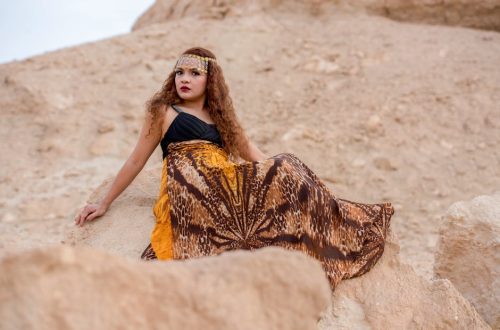
Leopard. That is the answer for most buyers, and purchase data supports it. It is the only creature print with documented crossover functionality across formal, casual, and transitional dressing without requiring outfit modification. A leopard-print blouse works in a creative corporate environment. A leopard-print midi skirt works for a dinner reservation. A leopard-print coat works over both. No other creature print covers that functional range.
Leopard: The Default Entry Point
For first-time buyers, the Faithfull the Brand Hinterland Midi Dress (~$280) and the Zara Animal Print Wrap Skirt (~$60–$70) are the two most reliable entry points at different price tiers. Both use warm-toned, mid-scale leopard in viscose — the combination that gives the widest pairing range and the least styling risk.
The Gucci GG Supreme leopard-pattern pieces represent the investment ceiling in ready-to-wear and are worth examining in-store even if you are purchasing at a different price tier. Seeing high-quality print color complexity in person gives you a calibration point for evaluating lower-cost options. That kind of direct comparison is more informative than any online description.
Snake Print: The Specialist Choice
Snake print in grey or taupe is the right option for evening-focused wardrobes. ASOS Design’s snake-print satin midi skirt (typically $40–$65) is a consistently available option that photographs well and sits at the right formality level for most occasion dressing. For investment-tier snake print, Dries Van Noten’s python-print silk separates represent the quality ceiling in contemporary ready-to-wear — pieces regularly sell out within two weeks of seasonal release.
Cool-toned snake print pairs with black, grey, navy, and jewel tones. It does not work with warm earth tones or rust. That narrower palette is precisely why snake print is a specialist tool rather than a wardrobe anchor.
Butterfly and Insect Prints: The Time-Sensitive Buy
Butterfly motifs peaked on the 2026–2026 runway cycle, appearing prominently across Marine Serre, Versace, and Roberto Cavalli within the same season. They are currently in mid-cycle — still wearable, not yet visually exhausted, but with a visible style horizon. Buy a butterfly-print piece if you genuinely like it and intend to wear it within the next 18 months. Do not buy it as a long-term wardrobe investment. The resale value of trend-specific creature prints depreciates faster than almost any other fashion category.
When Creature Prints Don’t Work: Three Specific Exclusions Worth Knowing
Does Animal Print Work in Conservative Professional Environments?
No — not as a central garment in most cases. Traditional finance, law, and client-facing roles in conservative industries represent genuine exclusion zones for bold creature prints as primary pieces. The workable exception: small-scale snake or leopard print used as an accent — a structured pump, a leather belt, a subtle print blouse worn under a solid blazer where the pattern is subordinated. The print must be incidental, not the focal point.
Occasion-specific context functions here the way jurisdiction-specific regulations apply in other consumer categories. A creative agency or fashion-adjacent industry has no such exclusion. Know your specific environment before committing to a piece that only works in some of them.
Can You Mix Two Different Animal Prints?
Yes, under one condition: the two prints must share a color family and be visually distinct in scale. Mid-scale warm-toned leopard paired with small-scale neutral-toned snake print can work — enough scale differentiation, enough palette overlap. Leopard paired with zebra fails on both counts: both are large-scale, and their palettes generate visual noise rather than cohesion.
There is no style advantage to wearing two creature prints simultaneously. A single well-chosen print does more work than two that compete. When uncertain, don’t mix.
What About Plus-Size and Extended-Size Styling?
The idea that small prints are more flattering on larger bodies is a myth that has not reflected real styling practice for at least 15 years. Proportion is the relevant variable — the scale of the print should relate to the garment’s visual scale, not body size alone. Universal Standard, ASOS Curve, and Eloquii all carry creature prints in extended sizes with the same fabric quality tiers available in straight-size lines. A well-fitted large-scale leopard print outperforms a poorly fitted small-scale print on any body type.
Fit at the shoulder seam is the most consequential variable across all body types and all creature prints. A creature-print garment with an incorrect shoulder fit reads as costume regardless of how strong the print quality is.
The fabric a creature print is rendered on determines more about how the final outfit reads than the print’s pattern, scale, or color combined — check the fiber content label before you check the price tag.