You walked in with a vision. You left with nothing — or worse, a $4 blouse you’ll never wear. Most people shop thrift stores the same way they shop fast fashion: browsing by color, grabbing things that look cute on the rack, making gut decisions they regret by Tuesday.
There’s a better way. Call it the Dr. DoThrifter approach — systematic, diagnostic, and ruthlessly practical.
Why Most People Leave Thrift Stores Empty-Handed
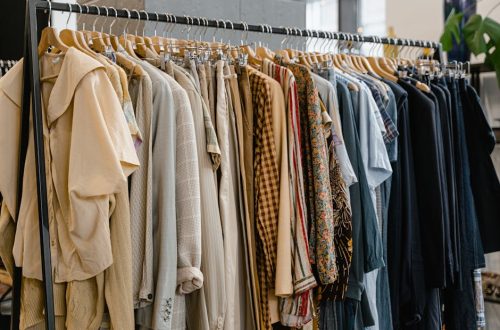
The racks are overwhelming. That’s the real reason. A typical Goodwill or Savers has thousands of items sorted only by color or size — no brand filters, no style categories, no quality tiers. Without a system, your brain hits decision fatigue in about 15 minutes and you start grabbing anything that breaks the visual monotony.
The solution isn’t more patience. It’s a narrower filter.
Before you walk in, decide two things: what category you’re hunting (denim, blazers, knitwear — pick one or two), and what your quality floor is. Not “I want something nice.” Something specific: natural fibers only, or structured shoulders, or flat seams. That filter cuts 90% of the rack before you touch a single hanger.
The other underrated problem? Going on Saturday afternoon. That’s when everyone else goes. You’re picking through a rack that’s been handled by 200 people since Thursday’s restock.
The real cost of shopping without a system
A thrift haul with no strategy costs you more than the $3 shirts suggest. Buy 8 things, wear 2, donate the rest in a year. That’s $24 wasted, plus the time, plus the cognitive overhead of a closet full of near-misses. The diagnostic method exists to fix exactly this: enter with a purpose, exit with fewer but better pieces.
The Fabric Diagnosis: Assess Quality in Under 60 Seconds
This is the core skill. Once you have it, everything else gets faster. You can reject 80% of a rack in the first pass without trying anything on.
The touch test for natural fibers
Synthetic fabrics feel slightly slick and warm up fast in your hand. Natural fibers — wool, cotton, linen, silk — feel cooler, have more texture, and drape differently. Run your fingers across the fabric. Wool should feel slightly rough or deeply soft depending on the grade. A merino sweater feels almost silky. A scratchy wool blazer is lower grade but may still be worth it depending on the construction underneath.
Polyester and acrylic pill faster, hold odor, and look cheaper after a few washes. Skip them unless it’s a structured piece where the outer shell is mostly decorative — like a lined blazer where the shell doesn’t sit against your skin for hours.
Reading care labels — the 10-second version
Check the label before you check the price. Labels that read “100% wool,” “100% cotton,” or “100% silk” are what you’re after. “Dry clean only” on a wool piece is expected and fine. “Dry clean only” on a polyester blouse is a red flag — someone is pretending it’s nicer than it is.
Also look at the country of manufacture. Not as a hard rule, but as a signal. Made in Italy, Portugal, Japan, or the USA on an older garment usually means better construction than something made for mass export. This is especially true for knitwear and tailored pieces from the 1990s and early 2000s.
Structural damage vs. surface wear — what’s actually fixable
Surface wear is usually fixable. A missing button: sew a new one for $0.25. A small stain on the back hem: bleach or overdye it. Minor pilling: a fabric shaver like the Gleener Ultimate Fuzz Remover ($30) handles this in 3 minutes. These aren’t reasons to put something back on the rack.
Structural damage is different. Check the seams — particularly armpits and crotch on pants. If the stitching is splitting, the fabric around it has been stressed repeatedly and will tear again after repair. Check collar bands for fraying that goes into the weave itself, not just the surface. Zipper replacements on jeans cost $15–25 at a tailor; decide if the piece is worth that before you commit at the register.
The diagnostic rule: surface damage costs time, structural damage costs money. Know which you’re dealing with before you buy.
The Thrift Store Restocking Schedule That Actually Matters
Thrift stores don’t restock randomly. Most chains follow predictable cycles, and knowing them is worth more than an extra hour of aimless browsing.
- Tuesday and Thursday mornings — The best days at most Goodwill and Savers locations. Donations processed over the weekend hit the floor Monday night or Tuesday morning. Thursday sees a second wave from mid-week drop-offs. Get there within the first hour of opening.
- Avoid Saturday between noon and 4pm — Peak traffic, picked-over racks, and restocking staff too busy putting out new items. Worst window for quality hunting.
- January and late August — The two best months for clothing quality. Post-holiday closet purges in January bring designer pieces from people who received gifts they don’t need. Late August catches the back-to-school wardrobe cleanouts, plus summer wardrobes being packed away for good.
- Tag rotation days — Most Goodwill locations use a colored tag system. Items that don’t sell by a certain date go to 50% off before being pulled. Ask your local store which color is currently on discount. This changes weekly and most staff will just tell you if you ask.
- After local estate sales — Watch EstateSales.net or Facebook Marketplace for large estate sale listings in your area. Unsold items often hit the nearest Goodwill 2–3 weeks later. Plan a visit accordingly — this is how people find Brooks Brothers suits for $8.
What’s Worth Hunting, by Category
Not all thrift categories return equal value. Some have consistent quality finds; others are mostly junk regardless of timing or technique. Here’s the honest breakdown:
| Category | Worth Hunting? | What to Look For | Brands to Target | Red Flags |
|---|---|---|---|---|
| Denim jeans | Yes — high value | Rigid denim, selvedge edge, pre-2015 cuts | Levi’s 501, Wrangler, Lee, Madewell | Super stretch, jegging cuts |
| Blazers | Yes — best thrift find | Natural shoulders, canvas chest (not fused) | Ralph Lauren, Banana Republic, Brooks Brothers, J.Crew | Chest that feels stiff and cardboard-like when pinched |
| Knitwear / Sweaters | Yes — if wool | 100% merino, cashmere, or lambswool label | L.L.Bean, Land’s End, Pendleton, vintage Shetland | Acrylic blends, heavy pilling at underarms |
| Outdoor / Fleece | Yes — high resale value too | Original tags, pile that still lofts | Patagonia, REI Co-op, The North Face, Columbia | No-name fleece, matted pile that won’t recover |
| T-shirts / casual tops | Low priority | Heavyweight cotton (6oz+), vintage graphics | Vintage Hanes Beefy-T, older Champion, concert tees | Tissue-thin modern basics — buy these new at Uniqlo |
| Leather goods | Yes — if genuine | Full grain or top grain, solid stitching | Coach (older styles), Frye, Fossil, Dooney & Bourke | Bonded leather that’s already peeling in layers |
| Shoes | Sometimes | Leather soles, resoleable construction | Clarks, Red Wing, Allen Edmonds, Blundstone | Crushed heel counter, delaminating soles |
The highest-ROI categories are blazers and knitwear. A Banana Republic wool blazer that originally retailed for $350 shows up at Goodwill for $12 regularly. Patagonia fleeces go for $6–15 and can be resold on Depop for $45–80 if you don’t end up wanting them. Denim is a close third — Levi’s 501s in rigid denim are genuinely rare now at retail and abundant in thrift stores if you’re patient.
The Brands That Are Always Worth Stopping For
If you see Patagonia, Eileen Fisher, or J.Jill — stop and look at it, regardless of whether you planned to. These brands made better versions of their products 10–15 years ago than they do now, and secondhand is often the best way to access that quality at any price.
Which brands to grab immediately
In women’s: Eileen Fisher (especially pre-2018, when fabrics ran heavier), J.Jill linen, Talbots wool, Ann Taylor structured pieces. In men’s: Ralph Lauren Purple Label (rare, but worth the search), Brooks Brothers pre-2026 (better internal construction than current), Orvis flannel shirts, vintage Pendleton wool. In outerwear: Patagonia, older Eddie Bauer down (goose down fill, not synthetic).
Brands to skip even at $3
Anything from H&M, Zara, Fashion Nova, or Shein — even mint condition. These were made to last one season. Thrift shopping them just delays the inevitable. Cato, Dressbarn, and most department store house brands (JCPenney’s Stafford, Sears Covington) similarly aren’t worth closet space or the extra laundry cycle.
When to use online thrift instead
When your local stores are picked over, go to ThredUp for women’s basics and Depop for vintage and streetwear. Poshmark has broader brand coverage but requires more filtering. On ThredUp, filter by brand first — type “Eileen Fisher” or “Patagonia” — then filter by condition “like new” or “excellent.” You’ll pay more than in-store but cut the scouting time significantly.
How to Assess Fit Without a Fitting Room
Many thrift stores have fitting rooms. Many don’t, or the line is long enough that you skip it. Either way, you need fast body-mapping skills that work off the hanger.
The shoulder test — the measurement that cannot be altered cheaply
Shoulder seams are the one measurement almost impossible to fix without spending more than the piece is worth. The seam should sit exactly at the edge of your shoulder bone — the bony point where your arm separates from your torso. Hold the jacket up against you, look in a mirror if available, or feel the seam placement with your hand.
If the seam falls an inch or more down your arm, the jacket is too big. If it pulls toward your neck, too small. Don’t try to justify a bad shoulder fit. Moving a shoulder seam costs $80–150 at a tailor and erases the value of almost any thrift find below $50.
Waist and hip math for pants
Most pants at thrift stores are labeled with a waist measurement, but thrift labels lie. Vanity sizing was inconsistent for decades, and vintage sizing runs genuinely small. Bring a flexible sewing tape measure — a $2 tape from any craft store fits in a jacket pocket. Measure the waistband flat, double it, and subtract one inch for seam allowance. Compare to your actual waist.
For hips on straight-cut pants, lay them flat, measure from side seam to side seam across the widest point of the seat, and double it. You want at least 1 inch of ease, ideally 2 for comfort.
When a tailor trip is worth it
The rule: alteration cost plus thrift price should still undercut retail by at least 50%. A $12 blazer needing $30 in sleeve and waist alterations costs $42 total. If the retail equivalent runs $200+, that’s a solid deal. If the retail equivalent is $80, you didn’t save much — and you had to coordinate a tailor visit on top of it.
Worth altering: hemming pants or skirts ($12–18), taking in the waist on trousers ($15–20), shortening sleeves on a shirt or jacket ($20–35), replacing buttons ($5–15 including materials). Not worth altering: moving shoulder seams, restructuring hips on pants, resizing a knit sweater in any meaningful way.
When Thrifting Is the Wrong Call
Thrifting is the wrong call for underwear, socks, swimwear, and athletic wear that sits close to skin for extended periods — no exceptions. It’s also the wrong call when you need something specific by a hard deadline: if you need a navy blazer for a job interview on Friday, buy it new. Uniqlo’s wool-blend blazers run $130–150 and are returnable. That’s not a failure of thrift ethics; it’s using the right tool for the situation.