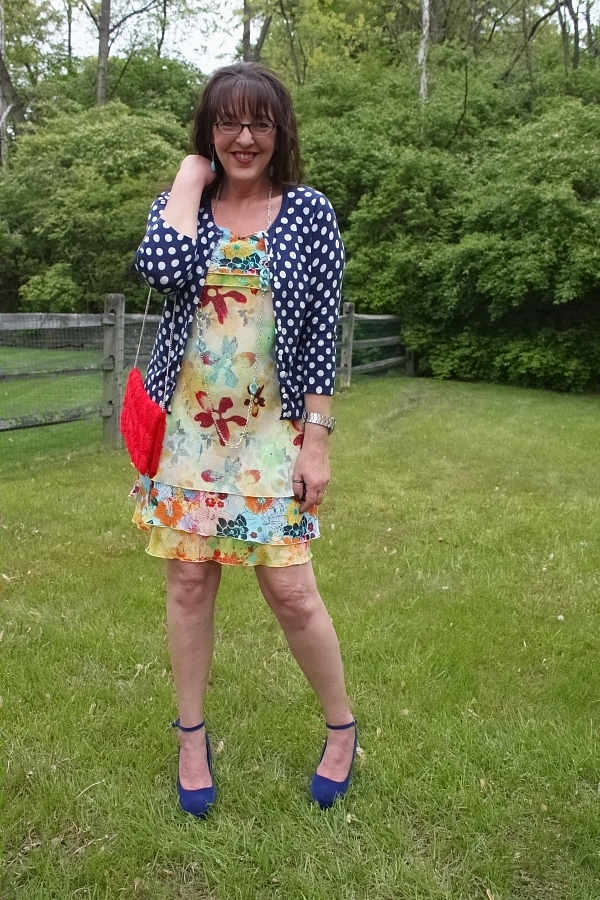
Pattern mixing occupies an odd position in fashion — technically there are no binding rules, but most stylists agree on what works and what reads as an accident. The framework below reflects approaches that consistently produce successful results across price points and style registers, from Ganni’s Scandinavian print layering to Zimmermann’s resort aesthetic. These are principles, not guarantees.
The Three Rules That Actually Govern Pattern Mixing
Pattern mixing has a hierarchy. The difference between an outfit that reads as intentional versus one that reads as rushed typically comes down to three variables: scale contrast, color anchoring, and pattern family. Get all three right and the combination generally holds. Fail on two of three and it usually falls apart — though exceptions exist at every level.
Scale Contrast Creates Visual Hierarchy
The single most consistent cause of pattern-mixing failure is pairing two prints of nearly identical scale. A medium floral blouse with a medium-scale plaid skirt — both patterns compete for the same visual register, and your eye has nowhere to settle.
The working principle: pair a large-scale print with a small-scale one. A wide-stripe top against a micro-check trouser creates clear hierarchy. One print leads; the other supports. Ganni applies this across most of their seasonal lookbooks — a bold oversized floral dress layered under a fine-stripe shirt worn open creates scale contrast significant enough that both prints remain legible without competing.
A useful working ratio: the dominant print should be at least twice the visual size of the secondary print. Test this from six feet away in a mirror. If both prints register with equal visual weight from across a room, the scales are likely too similar. Color and contrast still factor in — this is not a guarantee — but it is a reliable diagnostic when a combination refuses to resolve.
The Color Bridge
Mixed patterns typically need a shared color to look deliberate rather than accidental. This does not require identical hues — near-matches work, and even a tonal family connection is generally sufficient.
Example: a burnt orange and cream floral blouse against a terracotta and white stripe skirt. The orange family bridges both pieces. Anthropologie’s styling department leans heavily on this principle — their editorial shots almost always contain a connecting color thread running through every mixed-print look they photograph.
When working with unrelated palettes, a solid accessory can function as a visual mediator. A camel leather belt between a green-print top and a red-check skirt does not resolve a genuine color clash — but it creates a pause that prevents the look from reading as two separate outfits worn simultaneously.
The more unrelated the color palettes, the more structural work the rest of the outfit has to do. Stylists building three- and four-print looks — Farm Rio does this routinely — typically anchor everything with a single neutral. White sneakers, nude heels, or a black bag all perform this function without adding a third pattern to manage.
Pattern Family Logic
Geometric patterns (stripes, checks, plaids, houndstooth) mix more successfully with organic patterns (florals, paisleys, abstract prints) than two geometrics typically combine with each other. Competing structured prints fight for visual authority. An organic print next to a geometric one creates dialogue rather than argument.
Farm Rio’s coordinated sets — typically $120–$200 for a two-piece — almost always pair one geometric element against one organic print. Their runway looks combining three prints generally follow a consistent structure: one geometric base, one organic primary, one accent element. The company has been building pattern-heavy collections since 1997; that formula runs through nearly everything they make.
One exception: two geometric prints can coexist when they share a tonal family and the scale difference is significant. A bold windowpane plaid coat over fine pinstripe trousers works because both prints are muted, the scale differential is large, and shared color temperature holds them together. Engineered Garments in New York builds looks like this routinely — it is an established menswear tradition, not a styling error.
Scale Ratios at a Glance
Understanding scale ratios becomes more intuitive with a concrete reference. The table below maps common pattern combinations against three variables — scale match, color connection, and likely outcome. Individual colorways can shift the result in either direction, but these verdicts reflect what most stylists would consider the default outcome.
| Pattern Pairing | Scale Match | Color Link | Verdict |
|---|---|---|---|
| Wide stripe top + micro floral skirt | Large vs. small | Shared neutral | Works reliably |
| Medium floral blouse + medium gingham trouser | Similar — risk | Depends on colorway | Risky, likely to clash |
| Oversized plaid coat + small polka dot shirt | Large vs. small | Often mismatched | Works when colors anchor |
| Leopard skirt + bold abstract blouse | Similar | Usually unrelated | High risk — experienced mixers only |
| Pinstripe suit + small check shirt | Similar, same family | Tonal match possible | Works — classic tailoring exception |
| Bold floral dress + fine stripe cardigan | Large vs. small | Pull one color from floral | Reliable — Ganni and Zimmermann territory |
| Two similar-scale abstract prints | Similar | Variable | Avoid unless prints share the same palette |
The tailoring exception in row five is worth unpacking. Suits that combine similar-scale geometric prints — as seen from brands like Charvet or Savile Row bespoke houses — succeed because both prints are suppressed in saturation, reading as texture rather than competing pattern. Color discipline carries the combination when scale alone does not differentiate.
Leopard appears in the high-risk row rather than the avoid column for a specific reason. Leopard is generally treated as a neutral in styling practice — its warm, muted palette (amber, rust, camel, black) gives it a technically wide compatibility range with geometric prints. The failure condition is not the pairing itself; it is when the color temperatures diverge significantly between the two pieces.
Stripe and Floral Is the Most Reliable Starting Combination
If you are building a first intentional mixed-print look, start with a fine stripe and a medium-to-large floral. This combination works across nearly every style register and is the most forgiving pairing available to someone learning the technique.
Stripes are geometric — parallel lines, regular repeat, mathematical rhythm. Florals are organic — variable shapes, natural asymmetry, visual softness. They do not compete because they operate on different visual frequencies. Your eye reads the stripe as structure and the floral as surface, and neither overwhelms the other.
Zimmermann’s Spring 2026 collection demonstrated this almost methodically: a fine navy and white stripe blouse layered with a floral midi skirt, with navy anchoring both pieces. The blouse retailed for approximately $450, the skirt around $650. The formula scales to any budget — a striped tee from & Other Stories ($18–$35) works against a floral midi from Mango’s standard line with no functional difference in the underlying logic.
Marimekko’s Unikko poppy print — their iconic large-scale floral available on tops, dresses, and separates from roughly $90–$300 depending on the garment — pairs consistently well with their own Tasaraita stripe pieces. The brand has been demonstrating this specific combination since the 1960s. That is a substantial track record.
Executing the Stripe-Floral Combination Step by Step
- Lay both pieces flat. Identify the dominant color in the floral print.
- Choose a stripe that includes that dominant color as one of its stripe tones. An exact match is not necessary — a tonal family match is sufficient.
- Check scale: floral motifs should read visually larger than the stripe width from a normal viewing distance.
- Add one solid piece — shoes, bag, or belt — in a color drawn from either print to ground the look and prevent it from reading as two competing outfits.
- Check from across the room. If both prints are legible but neither aggressively dominates, the combination typically works.
When This Combination Fails
Stripe-floral pairings tend to break when the stripe is wide and bold rather than fine, and the floral is also large-scale. Both prints then read at equal visual weight and the hierarchy collapses. A 4-centimeter awning stripe against a large abstract floral creates too much visual information at too similar a scale. Dropping to a 1–2 centimeter stripe, or switching to a smaller-repeat floral, typically re-establishes the hierarchy needed for the combination to hold.
When Pattern Mixing Becomes a Mistake
Three competing prints of similar scale with unrelated color palettes is, in most contexts, genuinely too much — the look stops communicating and starts competing with itself. Skip mixed prints entirely for formal occasions where conservative dress is professionally expected, for settings where you want the conversation to be about you rather than your outfit, and any time you cannot explain the logic of a combination in one sentence. If you cannot articulate it clearly, it is generally not working.
Five Pattern Combinations With a Demonstrated Track Record
These pairings appear consistently across editorial, street style, and brand lookbooks. They are not guaranteed in every execution, but each has a well-established history of working across diverse colorways and body types.
- Houndstooth + polka dot: A tailoring pairing that also reads as contemporary in casual contexts. Works best in a tonal colorway — black and white, or camel and cream. A Stüssy houndstooth overshirt layered over a fine-dot blouse reads as deliberate because the houndstooth registers as structured geometry while the dot registers as texture. A medium houndstooth tooth against a 5mm dot provides sufficient scale differential in most colorways.
- Plaid coat + small floral blouse: The coat dominates at scale; the floral adds unexpected softness underneath. Keep both in a warm color family. Barbour’s tartan coats (typically $350–$600) pair consistently with small-repeat Liberty London tana lawn florals ($180–$300 for a blouse). The scale differential between a full tartan coat and a ditsy-print blouse is almost always sufficient to prevent visual conflict.
- Vertical stripe trouser + abstract print top: The directional structure of the stripe grounds the more fluid abstract print above it. Particularly effective in wide-leg trousers, where stripe length reads as elongating. & Other Stories carries both print types in the $50–$120 range, and their seasonal palettes are generally coordinated across categories — which makes pulling a matching colorway easier than sourcing from unrelated brands.
- Leopard print + geometric: Leopard functions as a neutral when the color temperature aligns. A warm-toned leopard (amber, rust, camel ground) against a rust-tone gingham or warm terracotta plaid is typically successful. A warm leopard against a cool-blue plaid almost never is. Color temperature mismatch — not the pairing category itself — is the consistent failure mode here.
- Ditsy floral + boucle or tweed texture: A small-repeat floral print against a woven boucle or tweed sits at the edge of pattern mixing — the texture reads visually as pattern even though it is technically a weave structure rather than a print. Chanel has built a recognizable aesthetic on this pairing for decades. At more accessible price points, Mango’s tweed separates (typically $80–$150) pair well against any small-scale cotton floral blouse in a warm or neutral colorway.
The leopard-and-geometric combination carries the most execution risk of these five — and produces the most memorable results when the color temperature is correctly matched. It is consistently the combination people say will not work and then cannot argue with once it does. That is the entire logic of a told-ya-so moment: the combination that most reliably earns one is the one that looked wrong on paper and right in the mirror.